How Custom Magnesium Dies Work in Foil Stamping and Embossing

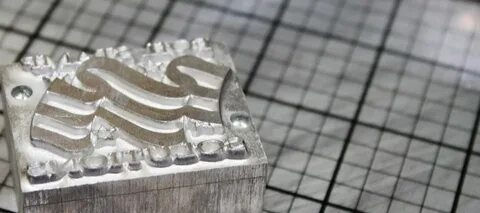
When you start to spend enough time around a print finishing shop and you begin to notice a pattern. The machines are impressive, heated presses, foil reels feeding smoothly through rollers, stacks of paper waiting their turn, but the real magic sits in something much smaller.
Thin metal plates. Sometimes no larger than a postcard. These plates are custom magnesium dies that become one of the most practical tools in modern print finishing. Foil stamping and embossing both depend on it. Without the die, the press has nothing to press. No image, no texture, no detail.
Just pressure and heat going nowhere.
The Die Is the Image
In foil stamping and embossing, the die carries the design. Imagine the artwork for a logo or decorative pattern carved into a metal surface, but inverted, raised areas where the design should appear and recessed areas everywhere else. When that raised surface meets paper under pressure, the design transfers physically into the material.
For foil stamping, the die presses heated foil into the surface. For embossing, it pushes the paper into a matching counter die to create dimension.
The principle is simple enough. The quality of the die, however, determines whether the result looks sharp and deliberate or slightly off.
Magnesium happens to be particularly well suited for that job.
Why Magnesium Works So Well
Magnesium isn’t the only material used to create stamping dies. Brass and copper have their place, especially in long production runs or sculpted embossing. But magnesium offers a combination of characteristics that printers appreciate right away.
· It etches cleanly.
· It conducts heat efficiently.
· And it’s relatively lightweight and fast to produce.
Those advantages matter more than they might seem. In a production environment where deadlines are tight and designs change frequently, a die that can be manufactured quickly without sacrificing detail becomes incredibly valuable. Magnesium delivers that balance.
From Artwork to Metal
Every die starts the same way: with artwork. Design files are prepared specifically for die production. Lines must be crisp. Tiny gaps or overly delicate details sometimes need adjustment, because not every design translates perfectly to metal.
Once the artwork is finalized, the die maker begins the photo-etching process.
A sheet of magnesium receives a light-sensitive coating. The design is transferred onto that surface using film or digital exposure, leaving the image protected while the surrounding metal remains exposed. Then comes the chemical etching stage.
Acid slowly removes the unprotected metal, leaving the design raised above the background. The process requires patience and control. Too much etching can soften edges; too little leaves shallow relief that won’t stamp properly. Experienced die makers know exactly when the depth is right. They’ve learned to read the metal almost instinctively.
When finished, the plate is cleaned, trimmed, and mounted so it can be secured inside the stamping press.
Heat, Pressure, and Foil
Foil stamping adds another layer to the process. Between the heated die and the paper sits a thin foil film. Despite the name, it’s not simply metal foil. Modern stamping foils are layered materials, carrier film, release coating, color or metallic layer, and an adhesive that activates under heat.
When the press closes, the heated magnesium die presses the foil into the substrate. The adhesive softens just enough to bond the color layer to the surface, while the carrier film lifts away cleanly as the press opens.
Only the areas touched by the raised die receive the foil. Magnesium’s thermal conductivity helps here. The metal heats quickly and distributes temperature evenly across the die surface, which ensures consistent foil transfer. Uneven heat can produce patchy or incomplete stamping, something printers try very hard to avoid.
Embossing Adds Dimension
Embossing uses the die differently. Instead of transferring foil, the die physically shapes the paper. The magnesium plate pushes downward into the sheet while a counter die beneath it supports the material. The paper fibers compress and stretch at the same time, forming a raised image.
Run your fingers over a well-executed embossed logo and you’ll feel the structure immediately. It’s subtle, but deliberate.
Magnesium dies handle standard embossing work well because they produce clean relief edges without requiring excessive pressure. For deeper sculpted effects, brass dies often take over, but for most commercial embossing jobs, magnesium performs reliably.
Bottom Line:
It’s easy to overlook the role of the die when looking at finished packaging or printed materials. Most people notice the shimmer of foil or the tactile feel of an embossed surface without thinking about the mechanism behind it.
Yet every one of those details begins with the die. A well-made magnesium die translates digital artwork into something physical. That transformation is what gives foil stamping its crisp shine and embossing its subtle depth.
Without the die, the press is just a machine. With it, the design comes alive in ways ink alone never quite manages.
PlateCrafters has multiple magnesium production lines and is proud of each of the craftsman that have been making dies for decades. We also offer UV Coating plates. Whatever you need, please contact us today.


Comments